






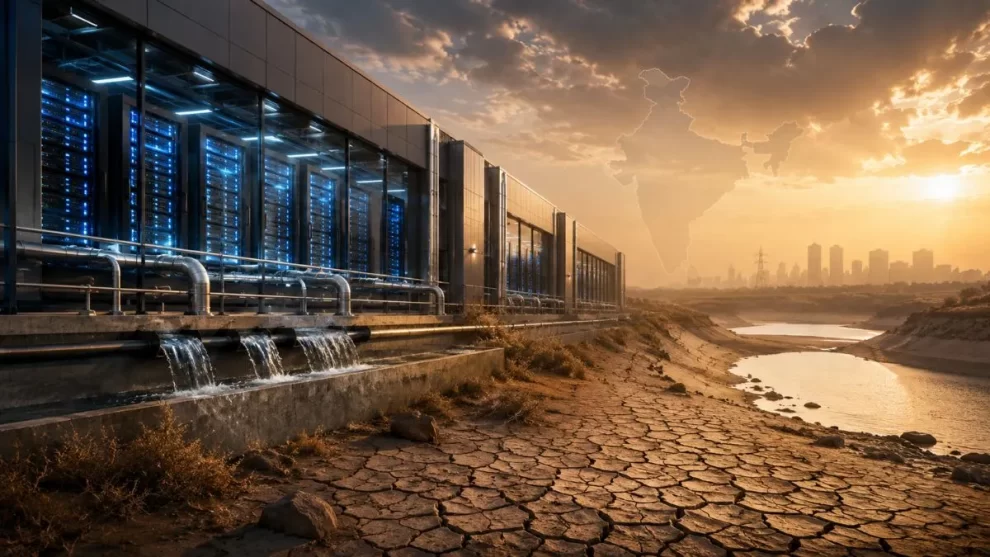

India is rapidly building data centres to support AI, cloud services, digital payments and data sovereignty. But this digital infrastructure boom is moving ahead without a strong national framework to protect water and energy resources. India already has 301 data centres, many of them located in cities that are already facing water stress. Capacity is expected to grow fivefold by 2030.
The danger is clear. Data centres need huge quantities of water for cooling. According to the report, India’s data centres consumed an estimated 150 billion litres of water in 2024. This could rise to 358 billion litres by 2030. S&P Global modelling warns that 60–80% of Indian data centres could face high water stress by the end of this decade if the present pattern continues.
This is not an argument against data centres. India needs digital infrastructure. But building first and regulating later is dangerous. Every new data centre must disclose its water use, energy use, source of water, cooling technology, and long-term impact on local communities. Data centres must not compete with homes, farmers and already water-stressed cities for scarce water.
India needs mandatory water-use disclosure, Water Usage Effectiveness standards, Power Usage Effectiveness standards, treated wastewater use, efficient cooling systems, and strict siting rules before this digital boom becomes an ecological burden.