








Here’s a categorical breakdown of the provided article:
1. Context and Background
- Location:
Moolagangal hamlet, south-eastern edge of Attappady, Palakkad district, Kerala. - Community:
70 Adivasi families with historical, cultural, and ecological ties to 982.43 hectares of ancestral forest land. - Legal Status:
Officially recognized as Community Forest Rights (CFR) land under the Forest Rights Act (FRA) of 2006, specifically Sections 3(1)(c) and 3(1)(d), guaranteeing access and usage rights to forest resources.
2. Current Issues and Violations
- Illegal Land Transfers:
Fraudulent records have transferred key parcels of land to non-Adivasis and entities from outside, particularly from neighboring Tamil Nadu and one non-profit trust, violating the FRA and the Kerala Scheduled Tribes (Restriction on Transfer of Lands and Restoration of Alienated Lands) Act, 1999 (KST Act). - Access Restrictions:
Fencing and privatization of land by illegal non-tribal claimants block Adivasi access to vital resources such as:- Kodungarapuzha river (source of water and cultural activities)
- Traditional cremation grounds and temple
- Forest produce (e.g., chool pullu for broom-making)
- Cultivation of millets (essential for their agroecological practices)
- Environmental Degradation:
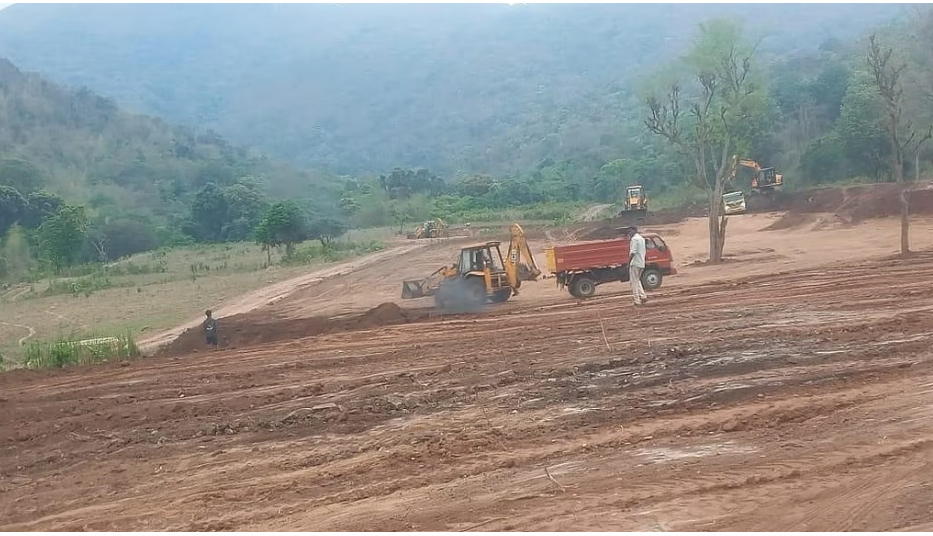
Large-scale clearing using bulldozers has destroyed crucial ecosystems, traditional crops, wild edible plants, and medicinal resources. Lands are repurposed for commercial tourism, eroding biodiversity and cultural heritage.
3. Misuse and Exploitation by Government Schemes
- Contradiction in Implementation:
Government welfare projects (e.g., Mahatma Gandhi National Rural Employment Guarantee Act, NABARD-funded projects, agriculture, and drinking water schemes) operate nominally for the benefit of Adivasis, despite land officially recorded in non-Adivasi hands. - Financial Exploitation:
Funds meant for tribal welfare are siphoned off. Land is officially designated as tribal for fund utilization but denied to Adivasis in practice. - Systemic Exploitation:
Revenue office openly declares the land not belonging to Adivasis, despite ongoing tribal welfare schemes being funded.
4. Consequences for the Community
- Livelihood and Food Insecurity:
Traditional agroecological practices disrupted, leading to dependency on external, non-local food systems and increased vulnerability to food insecurity. - Loss of Cultural Identity:
Denial of access to culturally significant spaces and traditional practices erodes community identity, ancestral knowledge, and social cohesion. - Biodiversity and Nutritional Sovereignty Loss:
Destruction of forests eliminates vital traditional food sources, forcing shifts toward monoculture diets, thus impacting health and nutrition severely.
5. Failure of the Forest Rights Act (FRA) and Governance
- Lack of Enforcement:
Despite legal recognition of rights and acknowledgment by relevant officials (Integrated Tribal Development Programme Officer, Divisional Forest Officer, District Collector), no meaningful action is taken to restore land or hold violators accountable. - Administrative Apathy:
Protests and formal complaints by Adivasis have met bureaucratic indifference, highlighting systemic failures and complicity.
6. Broader Implications
- Systemic Issue Nationwide:
The Moolagangal case reflects wider issues across India, where Adivasi communities face similar dispossession and exploitation despite protective laws like FRA. - Cycle of Poverty and Cultural Erosion:
Persistent failures perpetuate poverty, displacement, cultural loss, and ecological destruction, compromising intergenerational knowledge and community resilience.
7. Recommendations and Solutions
- Immediate Restoration of Rights:
Reverse illegal land transfers through transparent verification processes and reinstate Adivasi ownership and access. - Halt Environmental Destruction:
Cease commercial exploitation and forest clearing activities immediately. Undertake ecological restoration involving active participation of the Adivasi community. - Accountability and Governance Reform:
Enforce strict accountability for officials who have failed to uphold the FRA and KST Act. Ensure proper governance mechanisms and transparent management of tribal welfare schemes.
8. Conclusion and Call to Action
- The situation in Moolagangal is a critical test of India’s commitment to tribal rights, environmental justice, and governance integrity. Decisive and meaningful action must replace empty promises to protect Adivasi communities and their fundamental rights to land, identity, and livelihood.
For reading the original article, Click here…