




Reuters, 10 August 2026 — an analysis by Balazs Koranyi from Frankfurt, written in the sober register of economics reporting rather than alarm, which is precisely what makes it worth reading.
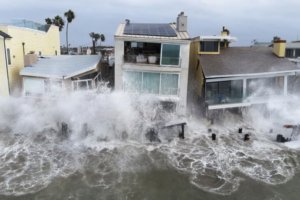
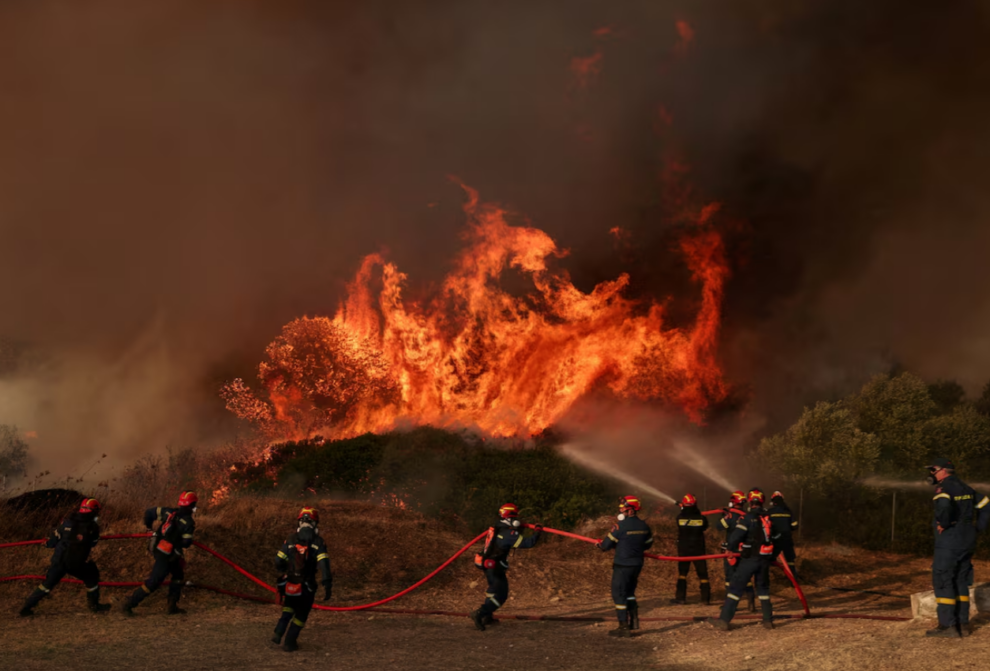
For anyone in Europe who still treated climate change as a problem for future generations, this summer has settled the argument. Record heat and drought — which scientists attribute in part to global warming — have wrecked power production, shipping and public health systems, and the wildfire season is on course to be the biggest Europe has ever recorded. The damage already runs into hundreds of billions of euros by the estimate of economists and academics, and they are clear that this is only the opening instalment, because costs will rise faster than temperatures do.
Europe’s climate is changing faster than that of any other continent. The damage is stretching public finances, throwing inflation into wild swings, redrawing the tourism map, and forcing the bloc to rethink how power is generated and how goods are moved. Sehrish Usman, an economist at the University of Mannheim, points to what makes 2026 different: multiple episodes of extreme weather arriving at once. Heatwaves, droughts and wildfires are occurring at the same time and largely in the same regions, so their impacts compound rather than merely add up.
Temperatures set records in June and in July, and the economic damage is expected to exceed every previous mark. Traffic on the Rhine and the Danube, two of Europe’s principal cargo arteries, is severely restricted by low water. More than half a dozen nuclear generating units have shut down or curtailed output because of cooling difficulties — a failure mode any station engineer will recognise, since ultimate heat sink temperature and river discharge limits are design assumptions, not adjustable settings. Agricultural yield estimates have been cut, with late-harvested crops such as maize and sunflower already showing a 6–7 per cent loss in July. Heat also cuts human productivity outright and has claimed tens of thousands of lives, with Germany alone reporting more than 10,000 heat-related deaths. On top of all this sit the costs of emergency response itself — firefighting, power curtailment — which further stretch budgets.
The numbers being put on this are not small. ING estimates that the halt to Rhine traffic alone will lower Germany’s GDP by 0.3 percentage points this year. Hungary’s MBH Bank calculates a 0.1 percentage point GDP hit for every week the country’s largest nuclear generator stays offline. Allianz, the German insurer, estimates that the two-week June heatwave by itself will cut European GDP by 0.3 percentage points, and that climate change will shave 5–7 per cent off growth by 2030 in the most exposed economies — Spain, France and Italy. Hazem Krichene, an economist at Allianz, warns the total bill for the year will be much larger, because that figure excludes the fires, the droughts, the various flood events and the El Niño that is expected. With the euro zone forecast to grow just 1 per cent this year, these are not marginal deductions.
Usman adds the finding that ought to worry policymakers most. The intuitive assumption is that damage peaks in the year of the extreme event and then fades. The research finds the opposite: the economic impact grows over the following years, because extreme weather sets off a chain of slow economic consequences.
Southern Europe stands to take the heaviest blow, since temperature spikes are largest there — cutting tourism income, worsening crop failures and inducing outward migration. ING economist Carsten Brzeski puts it plainly: he cannot picture tourists walking through southern Italy or Spain in 45 degrees, so the nature of tourism itself will change. The south may gain more year-round visitors, but summer peaks will fall as holidaymakers move north, hitting southern hospitality. The south will also absorb a larger food price shock, which complicates matters for a European Central Bank already struggling to hold inflation at target. Maximilian Kotz of the Barcelona Supercomputing Center notes that extreme temperatures push food prices up more in places that are already hot. His estimate is that extreme heat in 2022 lifted euro zone inflation by 0.34 percentage points through food prices, with the south taking a disproportionate share. The halt in river transport, meanwhile, is making it harder for fuel to reach parts of Europe and widening regional price differences.
The fiscal arithmetic is where this becomes political. Allianz notes in a research note that the fiscal consequences fall most heavily on the economies least able to absorb them. Reductions in annual tax revenue from lost output could reach 1.8 per cent in France and 1.3 per cent in Italy and Spain, because progressive tax systems mean revenues fall faster than output does. Business profit margins will decline too, depressing investment and compounding the loss. Costs surge simultaneously, since governments must both fund emergency response and invest in future-proofing power generation and transport routes. Heather Grabbe of the Bruegel think tank identifies the core weakness: countries still rely far too much on ad hoc emergency response, which is both expensive and often quite inefficient.
Investors may not tolerate the additional spending. Debt is already high, particularly in France and Italy, and these same states must fund defence and the green energy transition. Brzeski expects the trend to run towards higher government debt, which will mean pressure on the ECB to return to quantitative easing should bond markets sell off suddenly.
That is the shape of it. The continent that industrialised first, and contributed the largest cumulative share of the carbon now in the atmosphere, is discovering that adaptation cannot be improvised season by season, and that the institutions built to manage financial crises are now being asked to manage a physical one. For those of us in the Global South, the lesson is not schadenfreude but urgency — if the richest bloc on earth is absorbing this badly, the question of who pays for loss and damage everywhere else can no longer be deferred.