




To
Dear Sir/Madam
Subject: Regarding the urgent discontinuation of efforts to establish a nuclear power plant in Cheemeni, Kasaragod Dt, Kerala
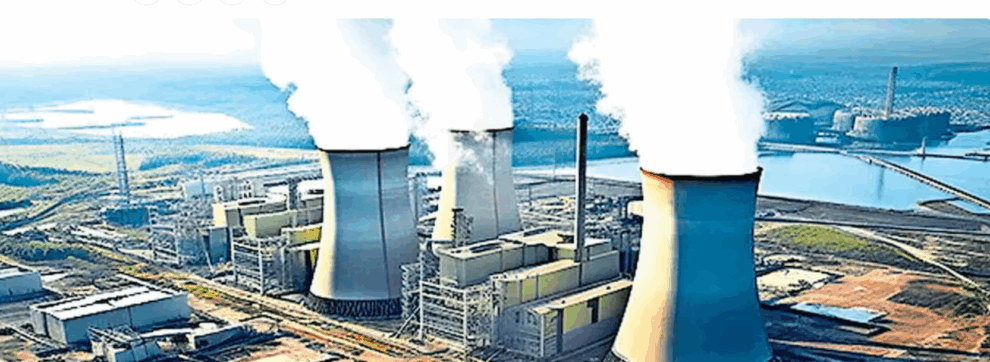
Discussions regarding the establishment of a nuclear power plant at Cheemeni, Kerala, first emerged in December 2023 during a meeting between a high-level team from KSEB and the Chairman of the Nuclear Power Corporation of India in Mumbai. Subsequently, in December 2024, discussions about setting up a nuclear power plant in Kerala were again brought up at a meeting in Kovalam, attended by Union Minister for Power, Manohar Khattar, among others. After the meeting, the Union Minister for Power informed media persons that the Central government was willing to establish a nuclear power plant in Kerala, provided the Kerala government allocated the necessary land in Cheemeni.
On June 10, 2025, during a press conference held to elaborate on the achievements of the Narendra Modi government’s Ministry of Power over the past 11 years, Energy Secretary Pankaj Agarwal stated that the Central government had informed the Kerala government of its readiness to establish a nuclear power plant in Cheemeni and would proceed with the project if the Kerala government provided the necessary permission letter.
The people of Cheemeni and the surrounding areas view this matter with great apprehension due to the profound environmental and safety risks. An All-India Anti-Nuclear Conference held in Cheemeni on April 26 and 27 discussed the safety issues of nuclear power plants established in various regions. The convention assessed that there has been significant technological progress in non-conventional energy sources for electricity generation. The conference also highlighted the immense potential for solar energy production in Cheemeni. It was pointed out that wind, solar, and biomass should be utilized more for electricity generation. The convention also emphasized that it is not right for the Left government in the state to remain silent on an issue that involves radiation lasting for thousands of years, unconfirmed methods for waste disposal, high costs, and impacts on the local population and water sources.
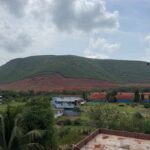
About Cheemeni: The Cheemeni region, far from being a suitable site for such a high-risk project, is an incredibly biodiversity-rich and hydrologically sensitive area. Of the 41 west-flowing rivers in Kerala, 19 are situated in Kannur and Kasaragod districts. The entire catchment area of Kavvaayipuzha is part of the Cheemeni hills. Kavvaayipuzha is formed by small springs on ninety small hillocks here. The Cheemeni hills are layers of sedimentary rocks called the Cheruvathur Formation by geologists. The surrounding area of Cheemeni is made up of river-origin rocks with layers of Laterite, China clay, Ball clay, charcoal, and Amber. A small river called Mattalai Puzha originates from the proposed site in Cheemeni, which is a
paleochannel that has shrunk over time. The Velichamthodhu stream, which originates from Cheemeni, flows through Peringome (previously proposed for a power plant) and joins the Perumbapuzha.
The Kavvayi Backwaters, about twenty-five kilometers long, joined by the Ramapuram, Perumba, and Kavvayi rivers in the south and the Kariyangode (Tejaswini) and Nileswaram rivers in the north, are the lifeblood of northern Kerala. Kavvayi Backwaters provides water livelihoods that support coastal life, including fishing, oyster cultivation, shelling, and rope making. The largest green oyster farm (kallummakai) in Asia is scientifically cultivated in these backwaters, which are completely free from industrial pollution.
Although the disaster caused by the explosion of a nuclear power plant is serious and irreversible, in this fragile ecosystem, the radioactive waste generated by the operation of nuclear power plants and the storage of nuclear waste always makes nuclear power plants a big threat. There have been about three hundred small and large nuclear leaks in India. If such a radiation leak occurs regularly in nuclear plants, this complex water web will be the first to be affected, with devastating consequences for the entire region and its vital aquatic life.
Furthermore, the Cheemeni hills are a treasure trove of biodiversity. SEEK, a well-established environmental organization in Kerala, has identified 700 different plant species from the Cheemeni hills. Dr. Biju, Professor, Dept. of Botany, Govt. College Kasargod identified about 350 different species of plants in the Ariytappa area of the Cheemeni Estate, which is proposed for the nuclear power plant. Dr. Alex, a scientist at KFRI, has identified 535 plants from the Cheemeni Hills. Botanists have recently discovered and described five new plants from here, including Ceropegia ariytappaensis, Eriocolon cheemenianum, and Utricularia centhomia. It is unthinkable that such a biodiversity-rich and historically important area would be chosen for a nuclear power plant anywhere else in the world.
The state government’s lack of a clear stance on establishing a nuclear power plant in Kerala, especially given these grave concerns, has created significant safety fears and concerns in the region.
In this critical situation, we demand that the state government unequivocally inform the Central government of its decision not to acquire and provide land for establishing a nuclear power plant in Kerala.
We anticipate your sincere involvement in this urgent issue and urge you to support us in getting the center’s proposal withdrawn.
| July 19, 2025 Cheemeni | Sincerely, |
For the Anti-Nuclear Power Plant People’s Vigilance Committee, Cheemeni, Kasaragod, Kerala Dr. D Surendranath (Chairperson)
Subrahmanian N (Convener) 9447228420 subrunaduvalath@gmail.com